Congratulations on incorporating your Sdn. Bhd. in Malaysia!
Company incorporation is only the first step. Once your company is registered with the Companies Commission of Malaysia (SSM), there are several important compliance requirements you need to understand to keep your company in good standing.
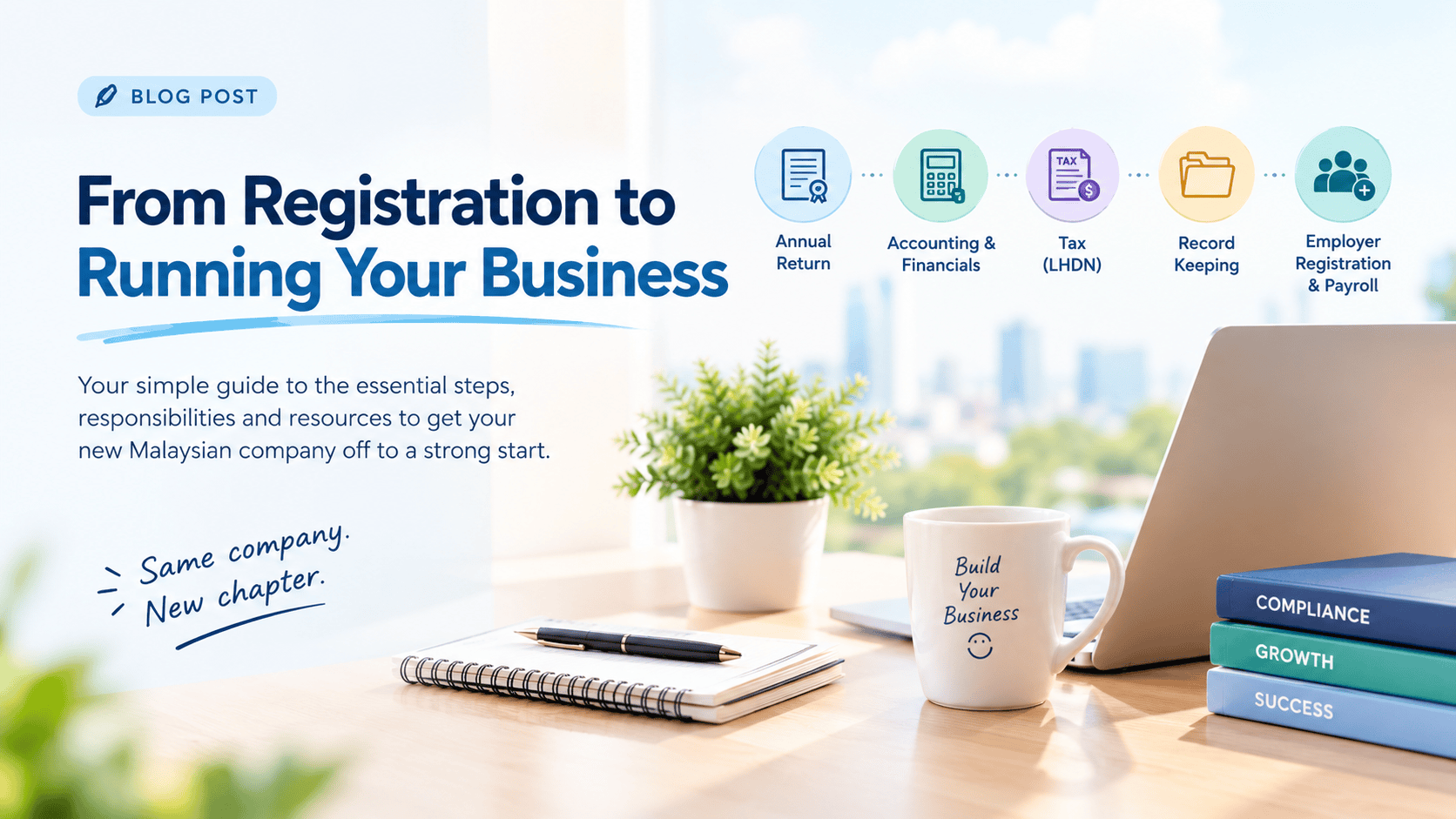
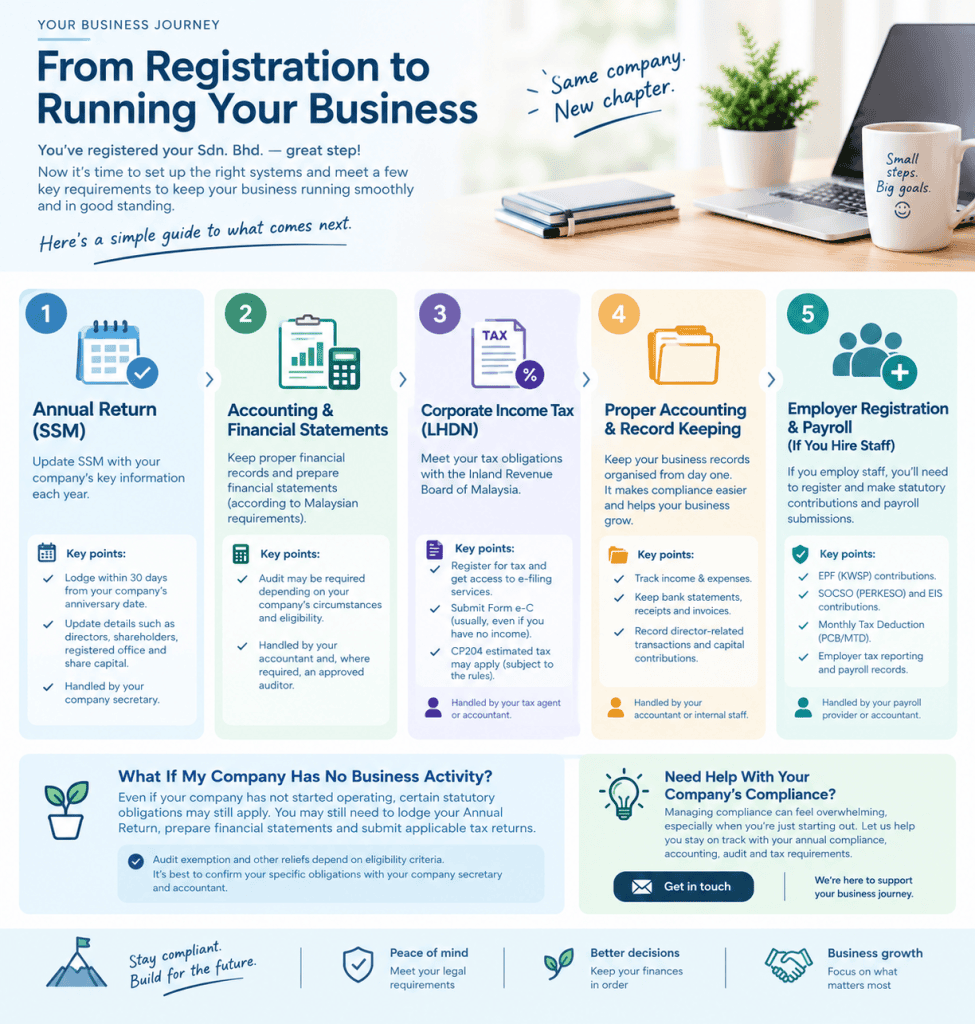
Here are the 5 essential things to know after incorporating your company.
1. Annual Return (SSM)
Every Malaysian company must lodge an Annual Return with SSM each year.
- Deadline: Within 30 days from the anniversary of the company’s incorporation.
- Purpose: To update SSM on the company’s key information, including its registered office, directors, shareholders and share capital.
- Who can assist: Your company secretary.
Even if your company has no business activity, you should not assume that the Annual Return can be skipped.
2. Company Financial Statements and Audit
Companies must prepare financial statements in accordance with applicable Malaysian requirements. Whether an audit is required depends on the company’s circumstances and whether it qualifies for an audit exemption.
- Purpose: To maintain proper financial records and meet statutory reporting requirements.
- Audit exemption: Certain private companies may qualify, subject to the applicable criteria and conditions.
- Who can assist: Your accountant and, where required, an approved auditor.
Having no sales or business operations does not automatically mean your company is exempt from all financial reporting obligations.
3. Corporate Income Tax (LHDN)
Companies must understand and comply with their corporate income tax obligations under the Inland Revenue Board of Malaysia (LHDN).
- Tax registration: Ensure the company has the appropriate tax registration and access to the relevant online services.
- Tax return: Companies generally need to submit Form e-C, even if they have no income, unless a specific exemption applies.
- Estimated tax: CP204 estimated tax requirements may apply, subject to the applicable rules and exemptions.
- Who can assist: Your tax agent or accountant.
Keep proper records of your company’s income, expenses and transactions, even if your company has not started operating.
4. Proper Accounting and Record Keeping
Every company should maintain proper accounting records from the beginning.
Keep records of:
- Business income and expenses.
- Bank statements and payment receipts.
- Sales invoices and supplier invoices.
- Director-related transactions and company payments.
- Capital contributions and other financial transactions.
Proper record keeping helps your accountant prepare financial statements and tax returns accurately. It also makes future audits and compliance work easier.
5. Employer Registration and Payroll (If You Hire Staff)
If your company employs staff, additional registrations and ongoing obligations may apply.
These can include:
- EPF (KWSP) contributions.
- SOCSO (PERKESO) and EIS contributions, where applicable.
- Monthly Tax Deduction (PCB/MTD), where applicable.
- Employer tax reporting and payroll records.
The applicable requirements depend on your employees and the nature of their employment. Make sure the necessary arrangements are in place before or when you begin employing staff.
What If My Company Has No Business Activity?
Even if your company has not started operating, has no sales or has no employees, certain statutory obligations may still apply.
Your company may still need to:
- Lodge its Annual Return with SSM.
- Prepare financial statements.
- Submit applicable corporate tax returns.
- Maintain proper accounting records.
Audit exemption and other reliefs depend on the relevant eligibility criteria. It is best to confirm your company’s specific obligations with your company secretary and accountant.
Need Help With Your Company’s Compliance?
Managing company compliance can seem complicated, especially for new business owners. Planning ahead and getting the right professional support can help you avoid missed deadlines and unnecessary penalties.
Contact us if you need assistance understanding your company’s annual compliance requirements, accounting, audit or corporate tax obligations.
Start your business journey with the right compliance in place.